
If you ask most people where the immune system lives, they will point to the bloodstream — white blood cells, antibodies, the spleen. They are not wrong, but they are missing the largest piece of the picture. Roughly 70% of the body’s immune tissue is concentrated in and around the gastrointestinal tract.
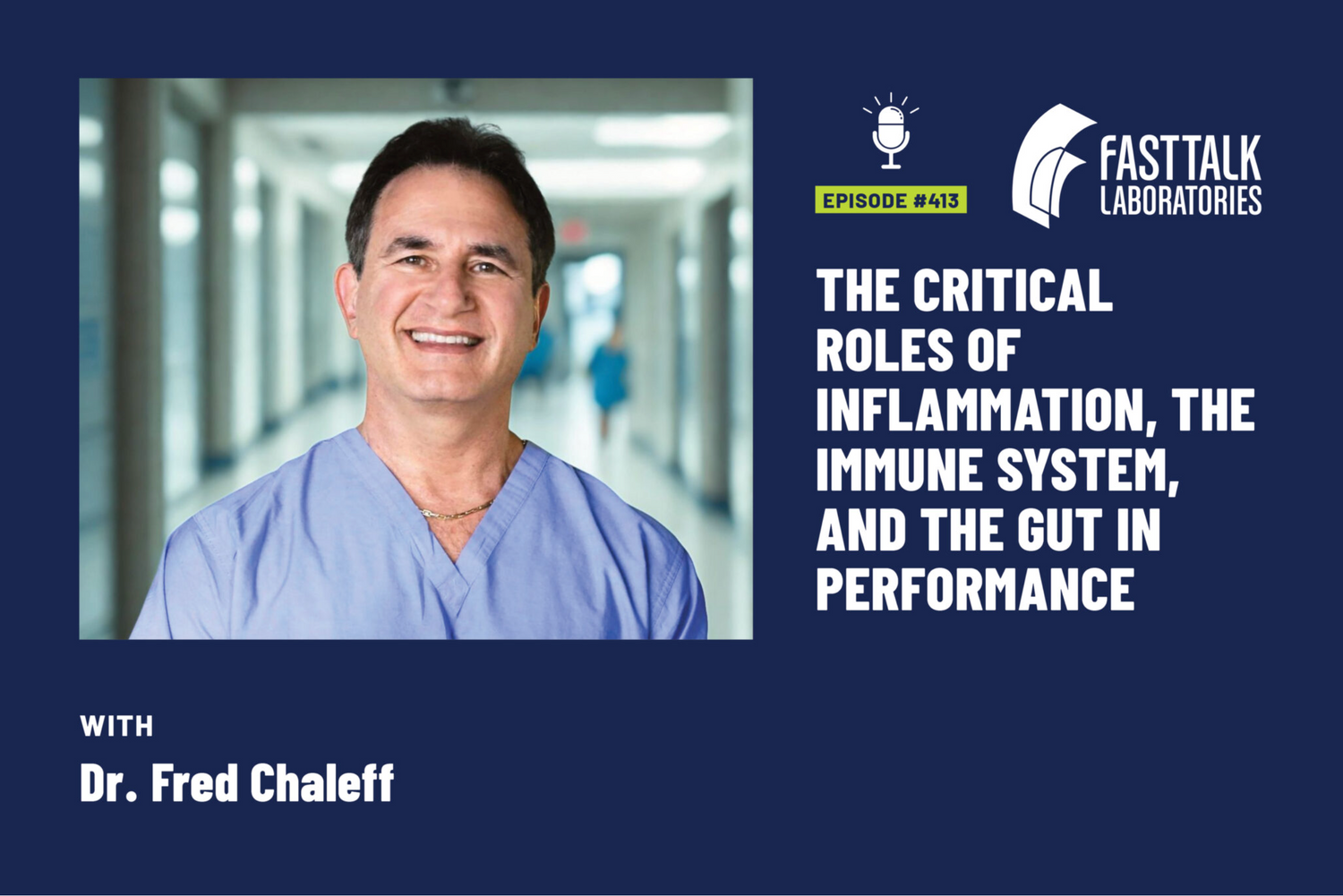
Scimera founder Dr. Fred Chaleff, an interventional cardiologist, returned to this point repeatedly in a recent conversation on the Fast Talk Labs podcast: the gut and the immune system are not separate systems that occasionally communicate. They are functionally inseparable.
The microbiome, briefly
Inside your intestines lives a community of microorganisms — bacteria, yeasts, even viruses — that estimates put at somewhere between 38 and 100 trillion individual cells. Their combined weight is around two kilograms (roughly four to five pounds). Most of those organisms come from 30 to 40 dominant strains, though hundreds more exist in smaller numbers.
This community is not random. The relationships between strains are symbiotic: byproducts from one species feed another, certain bacteria help build the mucus layer that protects the intestinal lining, and others produce vitamins (such as vitamin K) and neurotransmitter precursors that affect everything from mood to cognition.
When the ecosystem is in balance, your gut quietly does its job. When it falls out of balance — a state clinicians call dysbiosis — problems begin.
How dysbiosis becomes an immune problem
The intestinal lining is one cell thick. Behind it sits a dense network of immune tissue, including specialized clusters called Peyer’s patches in the small intestine. Those tissues are constantly sampling what the gut contents look like. When the microbial balance is healthy and the lining is intact, the immune system stays calm.
When the balance shifts and the lining starts to break down, bacterial fragments — including a molecule called lipopolysaccharide, or LPS — can cross from the gut into the bloodstream. LPS is a marker on the surface of certain bacteria, and the immune system reads it as an immediate threat. As Dr. Chaleff put it, it triggers a significant immune response.
This is where the term leaky gut comes from. In its severe form it produces obvious symptoms; in its mild form it can be subclinical — present, but only detectable as low-grade systemic inflammation. A blood marker called C-reactive protein (CRP) often picks this up. “Sometimes it’s just mildly elevated,” Dr. Chaleff said, “and a lot of doctors say, well, we just keep an eye on it. But sometimes we have to think about: is this a leaky gut?”
Why this matters for everyday fitness
For people who exercise regularly, the gut–immune connection has practical consequences. Chronic low-grade inflammation interferes with recovery between workouts. It is also associated, in a growing body of research, with autoimmune conditions and metabolic disease — outcomes that develop over years, not days.
The everyday signals are subtler: persistent low energy, lingering colds that take longer to resolve than they should, slow tissue healing. These are not always gut-driven, but the gut is one of the first places to investigate when they appear.
What you can do
Most of the practical advice that emerges from gut–immune research is unglamorous. Get enough fiber — the bacteria in your gut digest it directly, and its byproducts feed the rest of the ecosystem. Avoid routine use of NSAIDs, which damage the intestinal lining. Take antibiotics only when clearly needed, since they kill commensal species along with the pathogens. And consider whether the foods you eat regularly are working with your gut or against it.
A research-backed probiotic is worth considering, but the details matter — strain diversity, dosing, and how the capsule survives stomach acid all affect whether the product actually reaches the gut. We’ll cover what to look for in a probiotic in an upcoming post.
For now: pay attention to what’s happening below the diaphragm. Your immune system is.
This post draws on a conversation between Scimera founder Dr. Fred Chaleff, host Trevor Connor, and co-host Chris Case on the Fast Talk Labs podcast. Listen to the full episode: The Critical Roles of Inflammation, the Immune System, and the Gut in Performance.

Leave a comment
This site is protected by hCaptcha and the hCaptcha Privacy Policy and Terms of Service apply.