
If you have ever finished a hard workout and felt the back of your throat tickle, your nose start to run, or that vague “I think I’m coming down with something” sensation — and then woken up the next morning fine — you are not imagining it. There is a name for what happened, and it has surprisingly little to do with viruses.
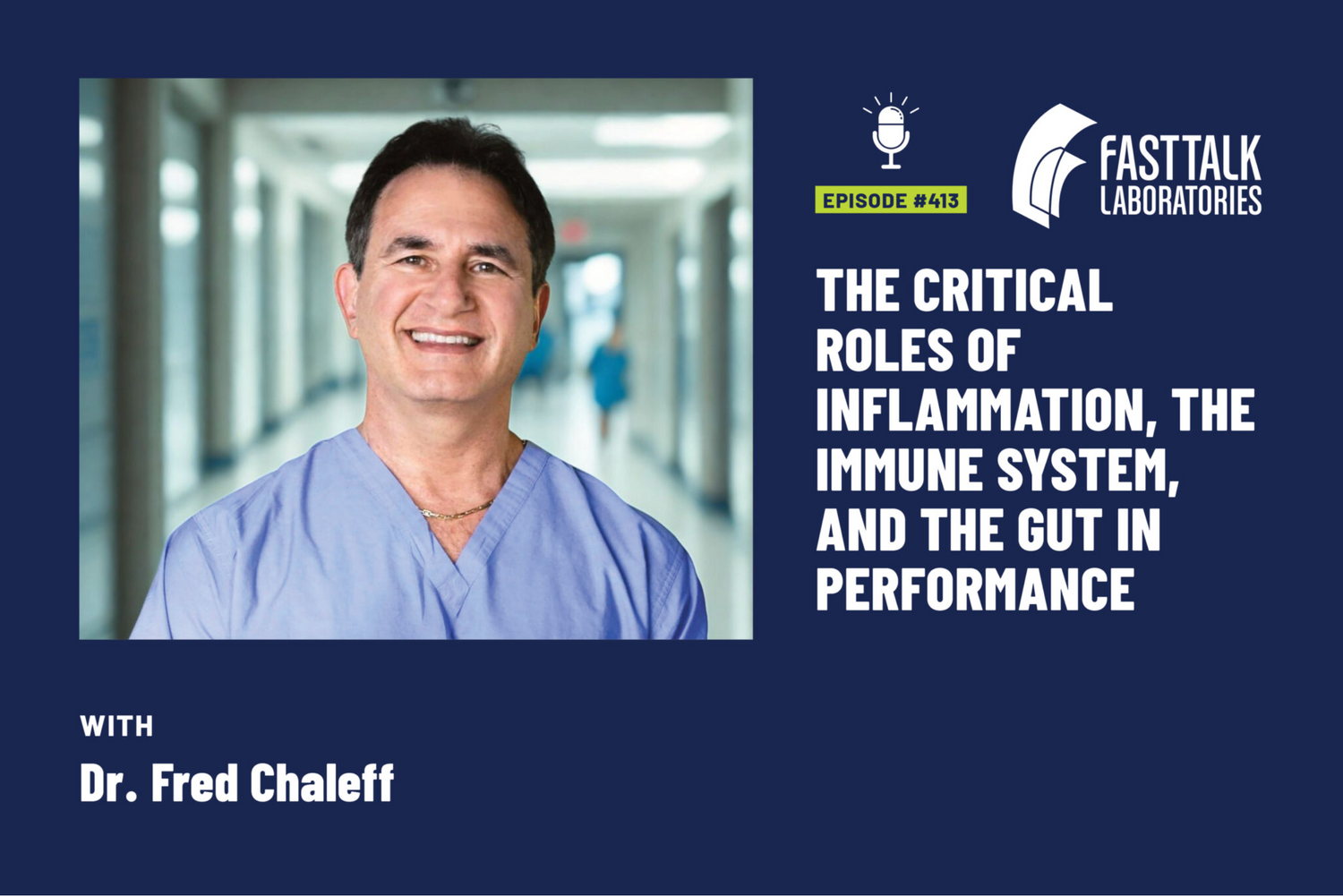
Scimera founder Dr. Fred Chaleff, an interventional cardiologist, walked through the mechanism on the Fast Talk Labs podcast.
The “open window”
When the body is pushed hard, the immune system is temporarily suppressed. This is not a malfunction. It is a metabolic trade-off: the body is redirecting resources toward muscle work, oxygen delivery, and heat dissipation, which means fewer resources are available for routine immune surveillance. Levels of certain interleukins — signaling molecules the immune system uses to coordinate its response — drop briefly.
The result is what researchers call the open window of infection susceptibility. It typically lasts three to six hours after a hard session. During that period, the body is more vulnerable than usual to whatever is in the environment.
What’s striking is what happens during that window even when there is nothing infectious around to take advantage of it.
Sick without a virus
Studies of elite endurance athletes who reported upper respiratory infections have produced a counterintuitive finding. When researchers tested for actual viral causes, they found one in fewer than half the cases. Most athletes who felt sick after hard training were not, in fact, fighting an infection.
Dr. Chaleff’s explanation: bacteria live normally in the nasal mucosa, kept in check by a layer of secretory IgA antibodies. When that defense is briefly weakened, those resident bacteria can proliferate enough to produce low-grade local inflammation — runny nose, slight throat irritation, the vague unwell feeling. Then, as you hydrate, rest, and the immune system returns to baseline, the body suppresses them again. You never actually get sick
There is a second contributor that has nothing to do with the immune system: heavy breathing during exercise irritates the nasal mucosa mechanically, especially in cold or dry air. “Let’s say you go skiing, and your nose just starts to run,” Dr. Chaleff noted. That is the inflammatory process responding to temperature and airflow — not a sign of infection.
For people prone to this, his clinical suggestion is simple: a thin layer of petroleum jelly or water-based gel around the nasal openings before training in cold or dusty conditions can reduce the irritation.
When it’s more than the open window
Sometimes post-exercise symptoms reflect a more serious issue. In high-volume training, the body’s local repair-driven inflammation can occasionally spill over into the systemic circulation, producing what clinicians call systemic inflammatory response syndrome (SIRS). In its extreme form this resembles endotoxemia and can put athletes in the hospital. It is rare, but it underscores that the line between productive post-exercise inflammation and damaging systemic inflammation is not infinitely wide.
Practical takeaways
For most people training at sustainable volumes, the open window is not dangerous. It is a real but brief vulnerability that responds well to ordinary recovery practices: rehydrate after hard sessions, eat enough protein and carbohydrate to support repair, and sleep. If you can, avoid crowded indoor spaces in the few hours immediately after a hard workout — a movie theater or long flight is a worse environment for a temporarily-suppressed immune system than for a baseline one.
If you train consistently and find you genuinely catch more colds than peers who train less, the open window is a candidate explanation worth taking seriously. There are evidence-based supports — including certain forms of beta-glucan that prime the innate immune system — that have shown effects in this exact population. We will look at those in detail in an upcoming post.
In the meantime, if your nose is running an hour after a hard session, you are probably not getting sick. You are recovering.
This post draws on a conversation between Scimera founder Dr. Fred Chaleff, host Trevor Connor, and co-host Chris Case on the Fast Talk Labs podcast. Listen to the full episode: The Critical Roles of Inflammation, the Immune System, and the Gut in Performance

Leave a comment
This site is protected by hCaptcha and the hCaptcha Privacy Policy and Terms of Service apply.