
There's a conversation most men don't have until something feels noticeably wrong. Fatigue that doesn't improve with sleep. Workouts that feel harder with less to show for them. A general flatness in mood, drive, or libido that's difficult to name but impossible to ignore.
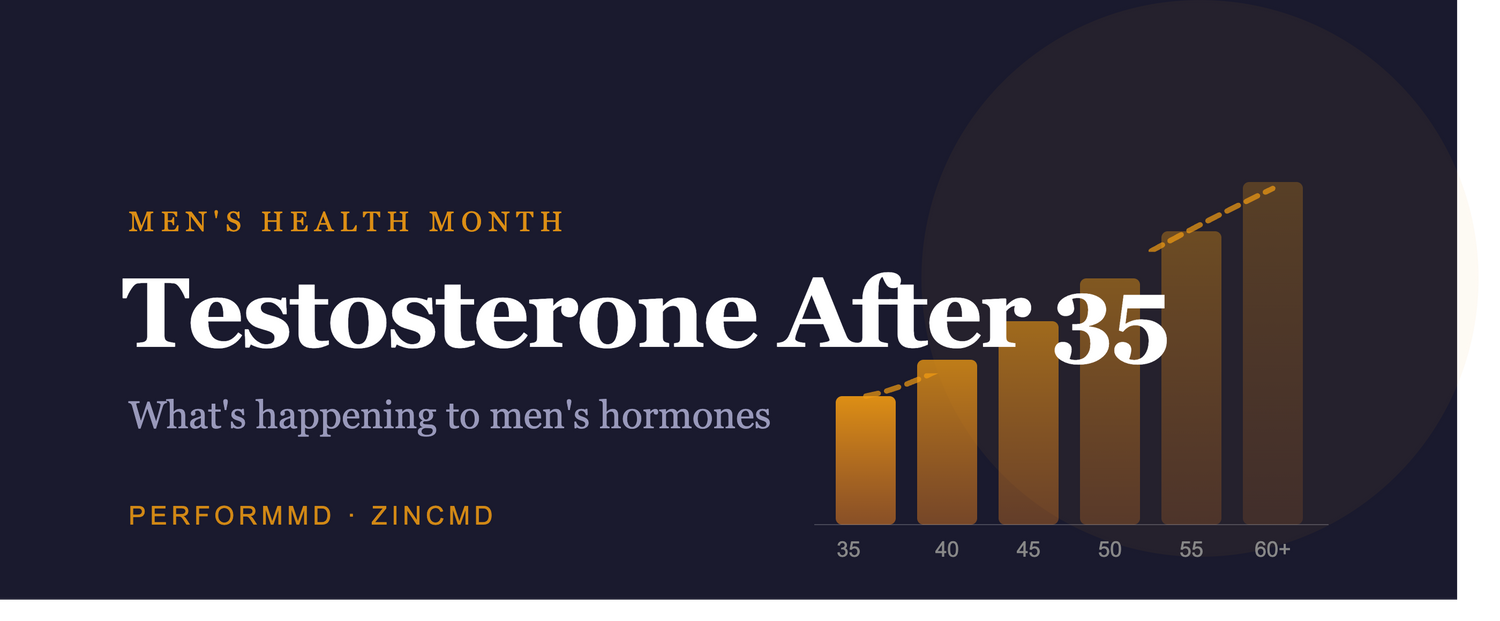
Often, the underlying thread is hormonal — specifically, a gradual but significant decline in testosterone that begins in a man's mid-30s and continues throughout his life.
The Testosterone Timeline: What Science Shows
Testosterone is the primary male sex hormone, and its role extends far beyond reproduction. It governs muscle mass, bone density, fat distribution, energy metabolism, cognitive sharpness, mood, and libido. When levels are optimal, everything from gym performance to professional focus tends to work better.
Here's the biological reality: testosterone levels in men begin declining at roughly 1–2% per year starting in their mid-30s. That rate may sound modest, but compounded over a decade, it translates to a meaningful shift in how men feel and function. By their mid-40s, many men are operating with testosterone levels significantly lower than they had in their prime — often without a clear clinical diagnosis, because their levels may still fall within "normal" lab ranges even as they experience clear symptoms.
Common signs of declining testosterone include:
- Persistent fatigue, even after adequate sleep
- Reduced libido or sexual function
- Difficulty building or maintaining muscle mass
- Increased body fat, particularly around the abdomen
- Low mood, irritability, or decreased motivation
- Brain fog or difficulty concentrating
The Zinc-Testosterone Connection
One of the most well-researched nutritional factors in male hormonal health is zinc — an essential mineral that plays a critical structural role in testosterone production. Zinc is a cofactor in the enzymes that regulate the hypothalamic-pituitary-gonadal axis, the hormonal cascade responsible for signaling testosterone synthesis in the testes.
Research has consistently shown that zinc deficiency correlates with suppressed testosterone levels, and that zinc supplementation can help restore or support normal testosterone production in men who are deficient. This is particularly relevant because zinc is one of the minerals most commonly depleted in men — especially those who exercise regularly, as zinc is lost through sweat.
Beyond testosterone, zinc supports immune function, wound healing, skin health, and the normal function of the male reproductive system. It's one of the few nutrients with a well-documented, mechanistic link to male hormonal health.
ScimeraMD's ZincMD is formulated for bioavailability and optimal dosing — delivering zinc in a form the body can readily absorb and use, rather than the poorly absorbed forms found in many generic supplements.
Performance from the Inside Out
Testosterone is one piece of the puzzle — but men's physical performance is governed by a broader hormonal and physiological ecosystem. Energy metabolism, nitric oxide production, circulation, and recovery all play roles in how men feel and perform day to day.
ScimeraMD's PerformMD is designed to address this fuller picture — supporting the physiological foundations of male performance, energy, and vitality through a physician-formulated blend targeting the systems that matter most to active men.
What Else Influences Testosterone?
Supplementation with zinc and targeted performance nutrients is most effective when paired with lifestyle habits that support hormonal health:
Resistance training is one of the most powerful natural testosterone stimulants. Compound movements — squats, deadlifts, presses — trigger significant short-term hormonal responses and support lean mass, which correlates with healthier long-term testosterone levels.
Healthy weight maintenance matters considerably. Adipose (fat) tissue, particularly abdominal fat, contains aromatase — an enzyme that converts testosterone into estrogen. Men who carry excess body fat tend to have lower testosterone and higher estrogen as a result.
Sleep quality is often underestimated. The majority of testosterone production occurs during deep sleep. Men who consistently sleep fewer than 6–7 hours per night show measurably lower testosterone levels than those who sleep 8 hours or more.
Alcohol moderation is another factor. Regular heavy drinking has been shown to suppress testosterone production and reduce sperm quality and semen volume — a finding reinforced across multiple large-scale analyses.
Stress management closes the loop. Chronic stress elevates cortisol, which is directly antagonistic to testosterone production. Men under sustained psychological pressure tend to show suppressed hormonal profiles, making stress reduction not just a mental health intervention but a hormonal one.
A Note for Fathers
Men's Health Month and Father's Day land in the same month for a reason. The energy, presence, and vitality that define a great father — patience, engagement, physical activity, emotional resilience — are all downstream of how well a man's body is functioning at its core.
Supporting your hormonal health isn't vanity. It's investing in the capacity to show up fully — for your kids, your partner, your work, and yourself. The science is clear: proactive nutritional support, combined with smart lifestyle habits, gives men the best chance at sustained vitality through every decade.
These statements have not been evaluated by the Food and Drug Administration. ScimeraMD products are not intended to diagnose, treat, cure, or prevent any disease. Always consult with your healthcare provider before beginning any supplement regimen.

Leave a comment
This site is protected by hCaptcha and the hCaptcha Privacy Policy and Terms of Service apply.